

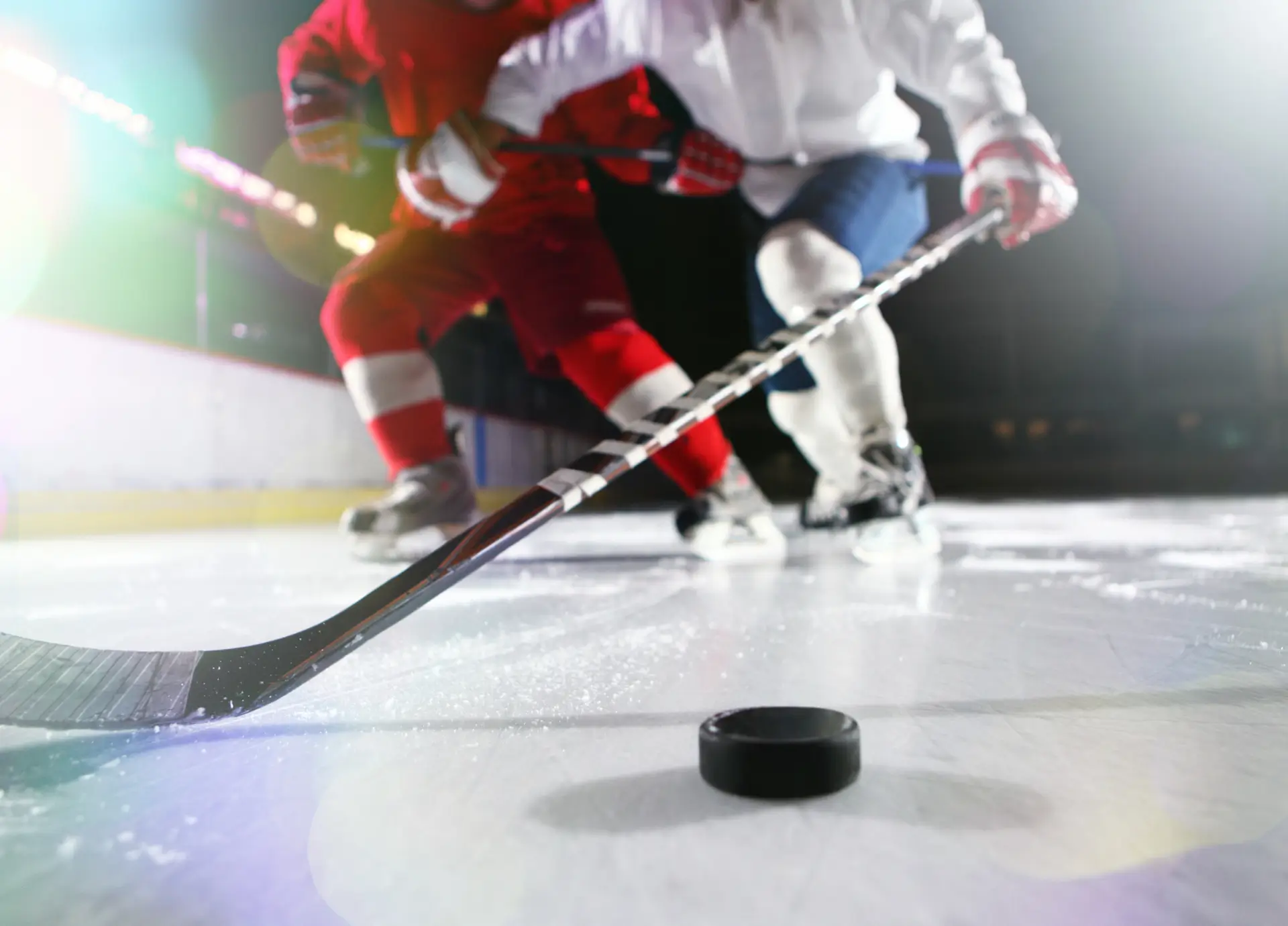
In ice hockey, a shift rarely lasts longer than a minute—but inside those seconds, the game moves at a speed that demands instant decisions and absolute mental clarity.
For the player on the ice, every moment can change the outcome of the game.
Introduction
In ice hockey, the shift begins with a jump over the boards. The puck drops, and immediately the pace explodes. Skates cut the ice, sticks clash, players accelerate, pivot, collide, and recover.
Within seconds, the athlete must process a flood of information: where the puck is moving, where teammates are positioned, where pressure is coming from, and whether the moment calls for aggression or restraint.
There is no pause button in ice hockey.
The shift might last 45 seconds. But in that time, the athlete might make ten decisions that influence the flow of the game. One hesitation can mean losing the puck. One rushed choice can open a scoring chance for the opponent.
For many players, the physical intensity is obvious.
What often goes unnoticed is the mental chaos that unfolds inside every shift.
Where This Challenge Shows Up in Ice Hockey
Ice hockey is one of the fastest team sports in the world. Decisions must be made before the brain fully feels ready.
The athlete rarely has time to think through options in a calm, analytical way. Instead, reactions happen in fractions of a second.
This mental demand appears in several common situations during league play.
A defender retrieves the puck behind the net while two forecheckers close in. In less than a second, the player must decide: reverse the puck, pass to the winger, or skate it out.
A winger receives the puck along the boards while skating at full speed. There is barely time to scan the ice before deciding whether to chip the puck deep, carry it inside, or pass across the zone.
In the offensive zone, the player might have half a second to shoot, pass, or protect the puck before a defender closes the gap.
Every shift contains these moments.
And because shifts are short, the athlete cannot afford mental overload. If the brain hesitates, the opportunity disappears.
The challenge is not just speed.
The challenge is clarity under speed.
A Simple Mental Shift
Many players believe they must think faster in order to play faster.
In reality, the most effective ice hockey players do something different.
They think less.
Not because they are careless, but because they trust their trained instincts. Instead of analyzing every option in the moment, they rely on pattern recognition built through practice and repetition.
The brain learns to identify familiar situations: a defender stepping up, a passing lane opening, a rebound dropping in front of the net.
When the athlete tries to consciously calculate every possibility, the game already moves past them.
But when the athlete allows trained instincts to guide the decision, the reaction becomes immediate.
This mental shift is subtle but powerful.
The goal is not to remove thinking entirely.
The goal is to reduce unnecessary thinking during moments that demand speed.
In ice hockey, the brain works best when preparation meets trust.
A Real-World Example
Late in the second period of a league game, the player jumps onto the ice during a line change.
The puck is already moving toward the defensive zone.
Within seconds, the player must sprint back, angle toward the boards, and intercept an opposing winger entering the zone.
As the puck arrives, two teammates are also skating into position. The opponent pressures aggressively, attempting to force a turnover.
For a brief moment, the athlete could overthink the situation:
Should the puck be chipped off the glass?
Should the player attempt a pass through the middle?
Should the puck be carried forward?
But the shift is already moving.
Instead of hesitating, the player quickly protects the puck, turns the body toward the boards, and makes a simple outlet pass to the winger.
The play continues.
Nothing spectacular happened.
But the shift stayed under control.
And in ice hockey, those small moments of clarity often prevent big problems.
What Coaches and Athletes Can Take From This
For many athletes, mental pressure in ice hockey does not come from the scoreboard or the crowd.
It comes from the speed of the game itself.
Players feel as if they must constantly keep up with the chaos around them.
But experienced coaches often observe something interesting.
The athletes who appear calm on the ice are not necessarily thinking more.
They are simply reacting with confidence.
This confidence is not accidental. It grows from preparation, repetition, and a clear mental approach.
For the athlete, the focus becomes simple:
Recognize the situation.
Trust the first clear option.
Stay engaged in the next moment.
For the coach of the Kleinbeck Academy, an important observation often emerges during training environments: when players feel mentally overloaded, their decision-making slows down.
When they feel mentally free, the game appears to slow down for them.
The difference is rarely physical ability.
The difference is how the athlete manages the mental speed of the game.
Key Takeaways
- Ice hockey shifts demand constant split-second decision-making.
- Overthinking slows reactions in fast-paced situations.
- Trust in trained instincts allows faster, clearer decisions.
- Small moments of mental clarity prevent major mistakes.
- Confidence in decision-making grows through repetition and experience.
🚀 Ready to Strengthen Your Mental Game?
Ice hockey moves fast—but your mental clarity can move even faster. Strong decision-making under pressure is a skill that can be trained.
Work directly with a coach of the Kleinbeck Academy to develop the mental focus and composure needed for high-speed competition.