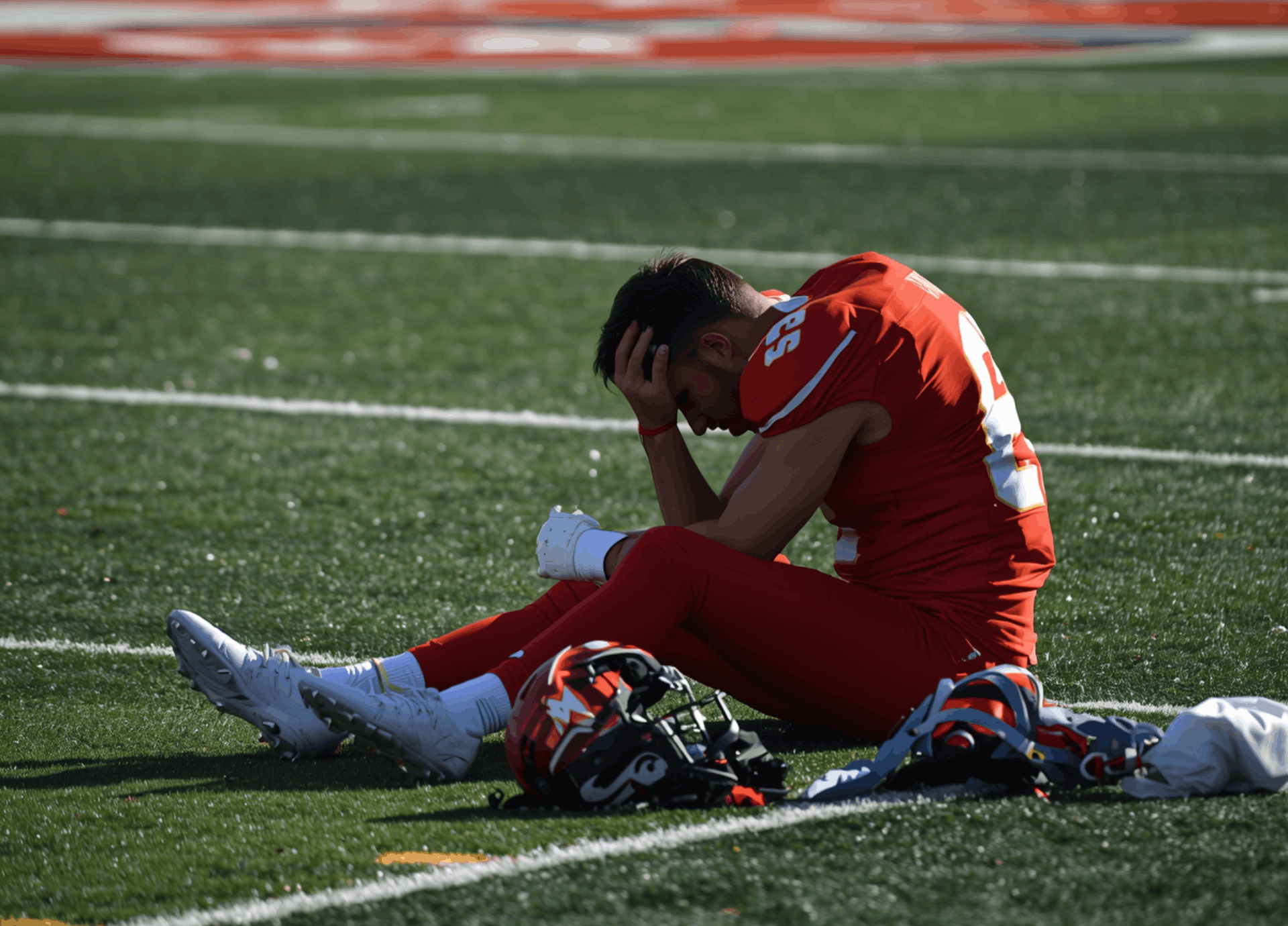
You’re ready physically. But emotionally? You feel the storm coming. Nerves. Frustration. Anger. Excitement. They’re all real — and if unmanaged, they can derail your game.
Emotions Are Data — Not Distractions
Athletes often hear “control your emotions” like emotions are the problem.
They’re not. They’re information. They’re signals.
The real problem is reaction without awareness.
When athletes don’t notice what’s rising inside, emotion takes the wheel.
Turn Self-Doubt Into Drive: The Confidence Formula for Athletes
The Formula: Notice – Name – Navigate
The key is not suppression. It’s skill.
Train your emotional control like any other skill — through reps, patterns, and self-regulation.
1. Notice
Learn your signals. Does your breath change? Jaw tighten? Focus narrow?
2. Name
Put words to it. “I’m irritated.” “I’m amped.” “I’m distracted.”
3. Navigate
Use a trained response:
- Breath reset
- Focal point
- Body cue (shake out, reset posture)
Case Study: From Red Zone to Reset
A soccer player in our coaching program struggled with anger after missed calls. We trained her to spot her red zone cue: clenched fists.
Her reset routine:
- Two deep breaths
- Look at the sideline
- Say: “Next play”
Her cards went down. Her minutes went up. Her performance stabilized.
What Emotional Control Is Not
- It’s not being robotic
- It’s not faking calm
- It’s not ignoring energy
It’s choosing where to direct that energy — instead of letting it leak.
Coaching Notes
- Debrief emotions post-game: what was felt, what helped, what didn’t
- Train resets in high-intensity drills
- Normalize emotional ups and downs
Final Thought: Feel It. Name It. Train It.
Emotion isn’t your enemy. It’s your engine. And when you train the skill of regulation, you take back the driver’s seat.
The Confidence Posture: How Body Language Shapes Belief and Performance
🔑 Learn the Tools to Coach Emotional Control Under Pressure
In the Sports Mental Coaching Certification, we teach the tools to help athletes navigate high-pressure emotions with clarity, not chaos.